Research Universe
Linked nodes organise themes such as ocean processes, ice dynamics, solid Earth, observations, paleoclimate and future projections.
A personal research-communication project exploring how a long Antarctic ice-sheet review can become a navigable system of linked concepts, evidence and interactive views.

A long review can hold a coherent account of a scientific system while still being hard to keep in view as a whole. The source for this project moves between past climates, present observations, ice and ocean processes, solid-Earth feedbacks and future uncertainty.
I wanted to move between those relationships without losing the paper beneath them. Building an interface became a way to test whether the material could remain connected, searchable and legible without pretending that the interface replaced the reading.
Could a review become a place to move through, while keeping its evidence and uncertainty in view?
Noble et al. · 2020 · 89 pages
The project starts from The Sensitivity of the Antarctic Ice Sheet to a Changing Climate: Past, Present, and Future, published in Reviews of Geophysics. The paper remains bundled with the local application and searchable from the interface.
Alongside it, structured data records six broad research areas, 25 topics and the questions, regions and keywords that connect them. Those structures are not a second scientific source; they are an interpretive layer for navigating the review.
T. L. Noble et al. (2020)Building did not follow the reading. It became part of the reading.
Keep the 89-page review available as evidence, rather than separating the interface from the material it interprets.
Organise research areas, topics, questions, regions and keyword relationships into data the interface can move through.
Use linked nodes, evidence cards, conceptual observation layers and controlled scenarios for different kinds of question.
Let the structure change through a Streamlit prototype, Windows packaging and a later native desktop reconstruction.
Real views from the desktop application and the earlier Streamlit prototype.
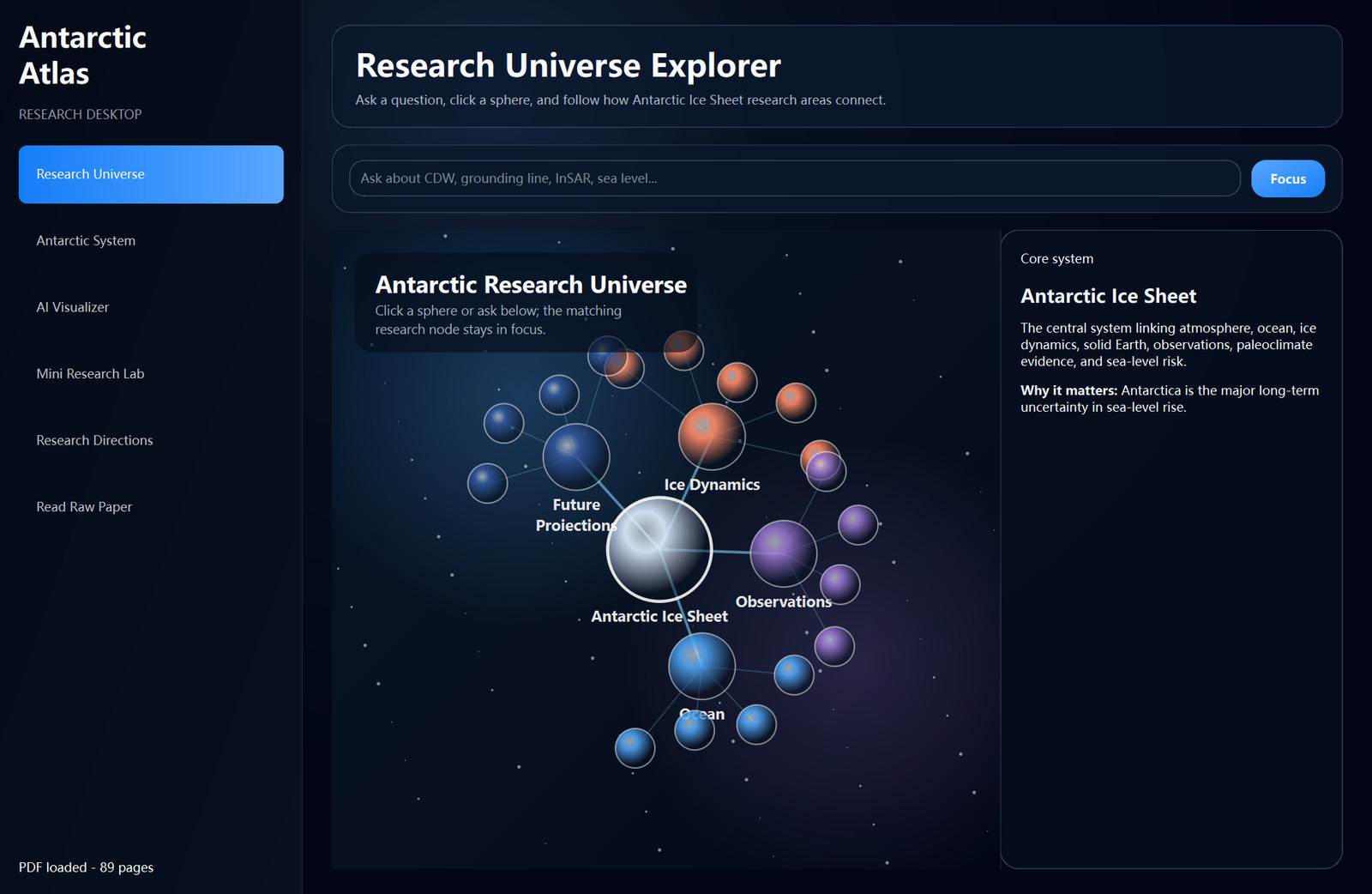
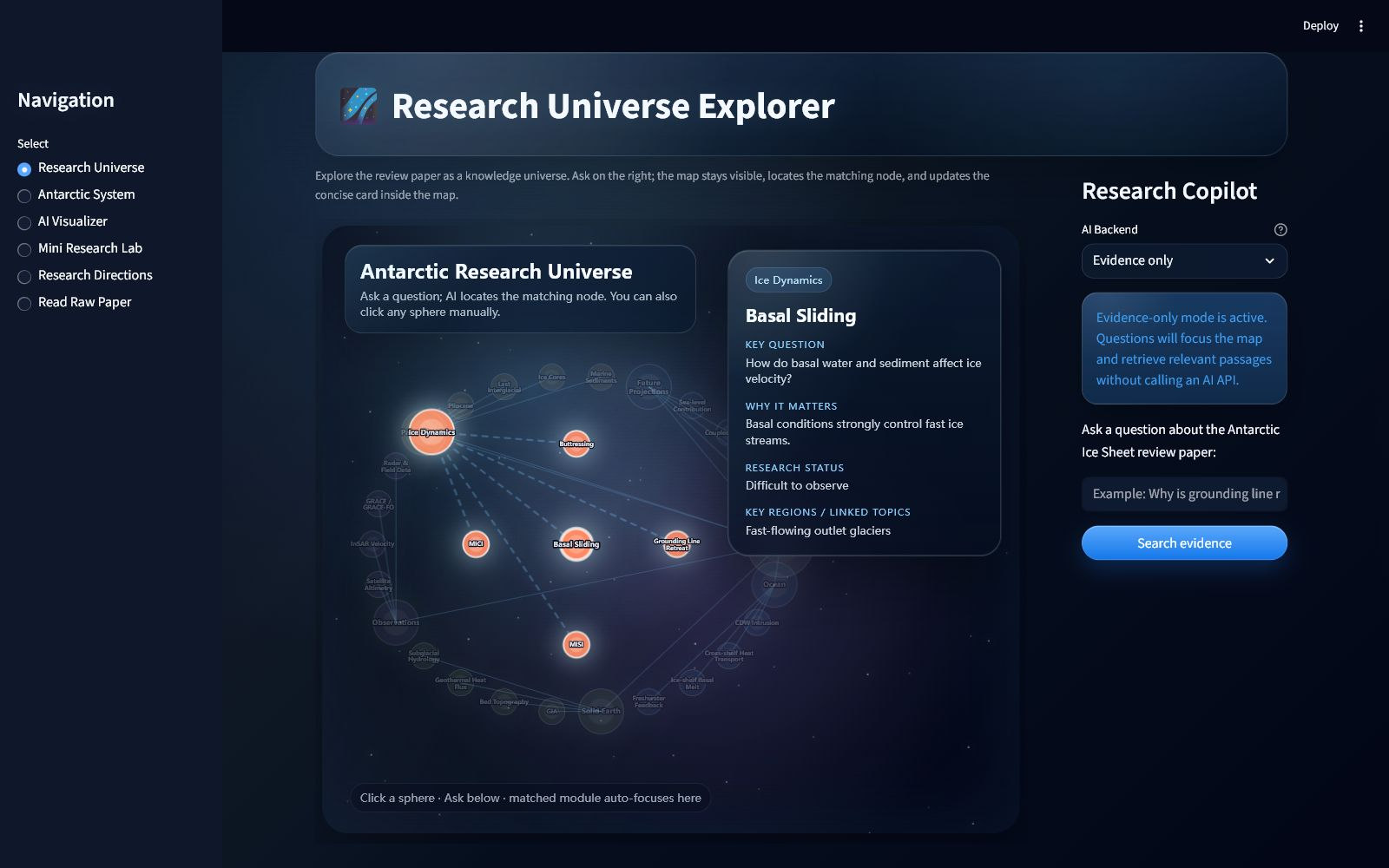
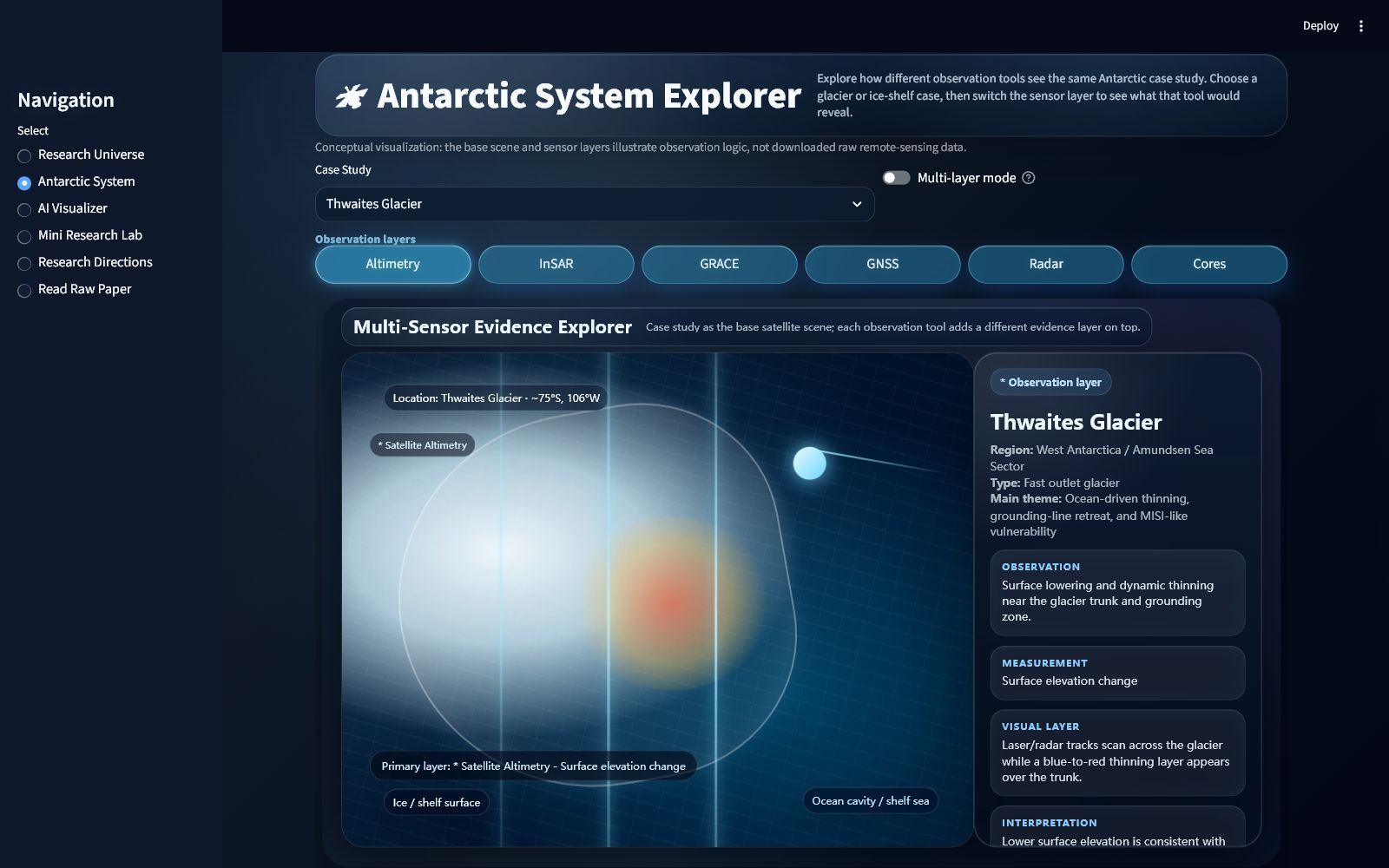
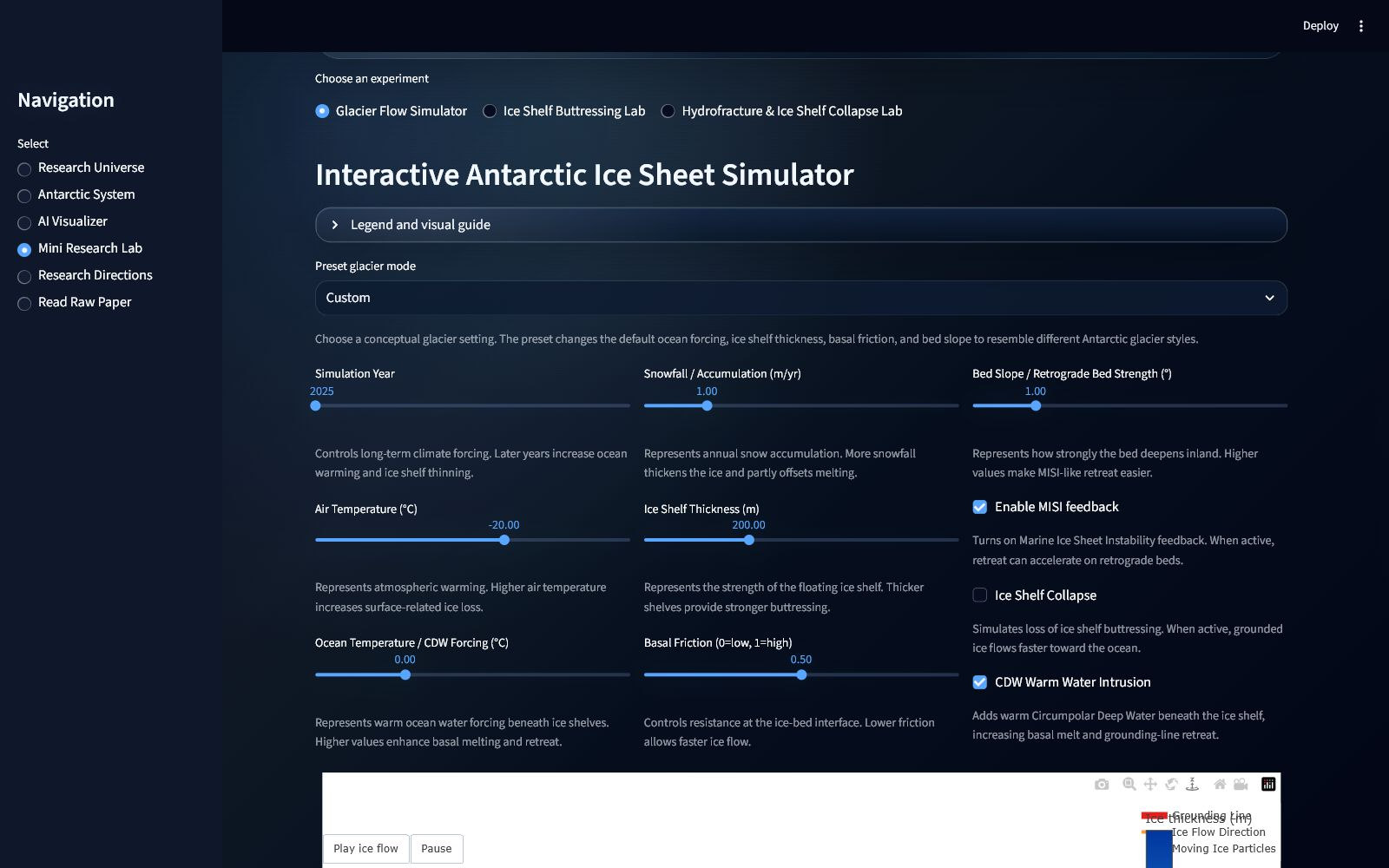
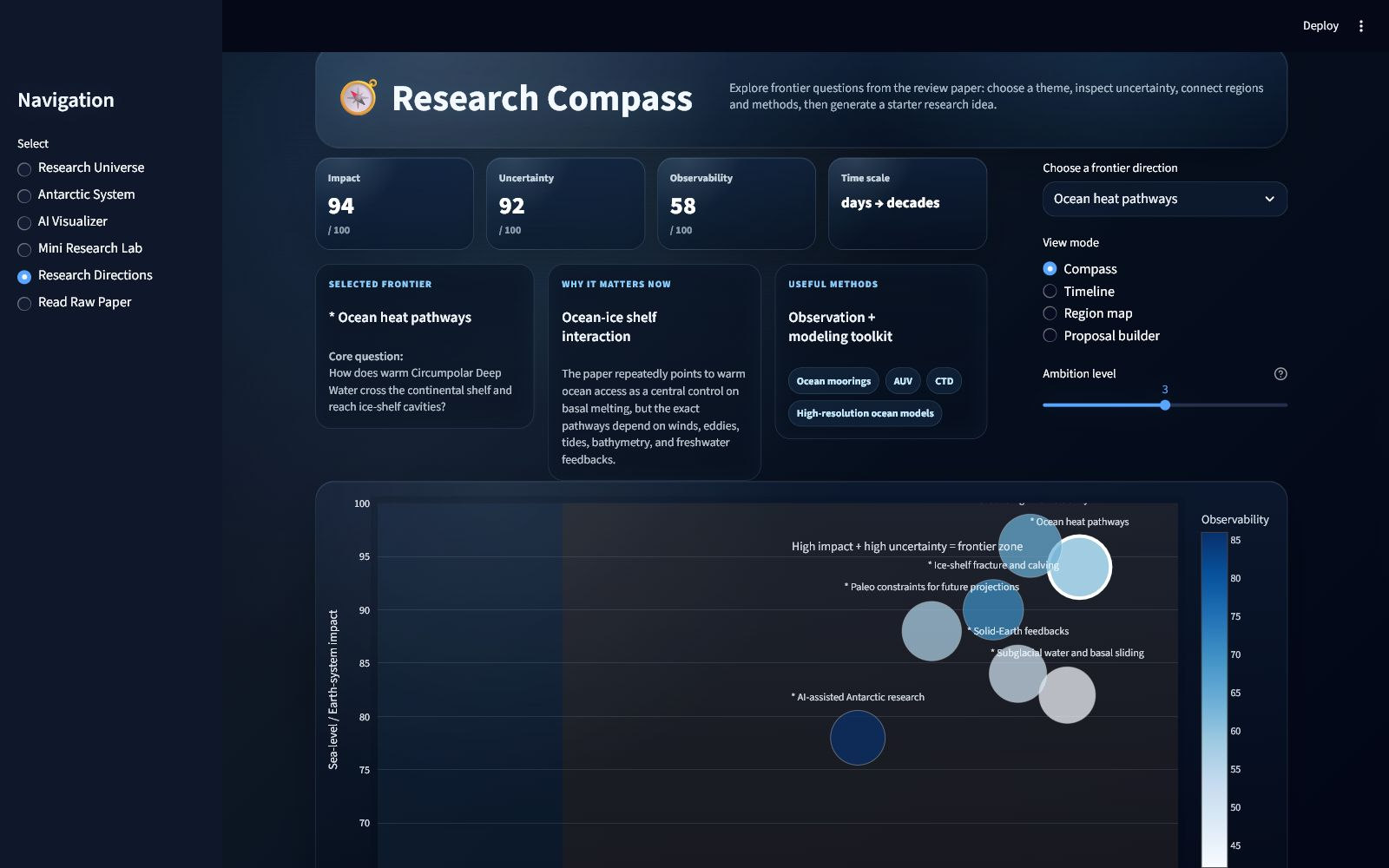
The tools follow the shape of the problem; they are not the story by themselves.
Structured JSON files hold six research areas and 25 topics. Shared Python modules load that material and keep the bundled review searchable.
The current primary product uses a native Windows shell for the six research views, language switching and local application settings.
The earlier web implementation remains the historical prototype. Plotly supports the interactive views used in the conceptual lab scenarios.
Evidence-only retrieval works without an API key. Ollama, DeepSeek and OpenAI are optional backends for assisted questions and narrative views.
A Streamlit research environment established the six views and the idea of moving through a review rather than reading it only in sequence.
The prototype gained visual refinement, Windows packaging, local AI options and a more deliberate application structure.
The interface was rebuilt in PySide6 while preserving the earlier product model and interaction intent.
English and Chinese were consolidated into one application, with in-app language switching and broader localisation coverage.
Turning the review into areas, nodes, layers and scenarios meant deciding what belonged together and what needed to remain distinct. That made information architecture part of the scientific communication, not simply a way to arrange screens.
The build also made the limits of interaction more visible. A conceptual layer can clarify how a measurement relates to a case, but it can also look more authoritative than it is. Naming the layer, its source and its limits matters as much as making it move.
Moving from a Streamlit prototype to a native desktop application exposed a second kind of learning: a useful idea needs shared data, testable search logic and maintainable boundaries before it can become a dependable tool.
09 — Current status
The source repository and Windows releases are public. The latest tagged release is v3.1.2, while the main branch contains later maintenance work. A legacy Streamlit URL exists, but it was sleeping when checked in August 2026, so it is not presented here as an available live demo.
This project is not a validated ice-sheet model, a new scientific study or a systematic review. It is a research-communication and learning prototype centred on one review paper. Several views use curated relationships or conceptual scenarios, and optional AI output should never replace direct reading of the source.